
Adam Back Again Rejects Satoshi Claim After NYT Probe — The Real Fault Line Is Stylometry
After an 18-month NYT probe named him Satoshi, Blockstream CEO Adam Back says he isn't Bitcoin’s creator. The case leans on writing analysis—here’s why that thesis is weak.

Because Bitcoin
April 8, 2026
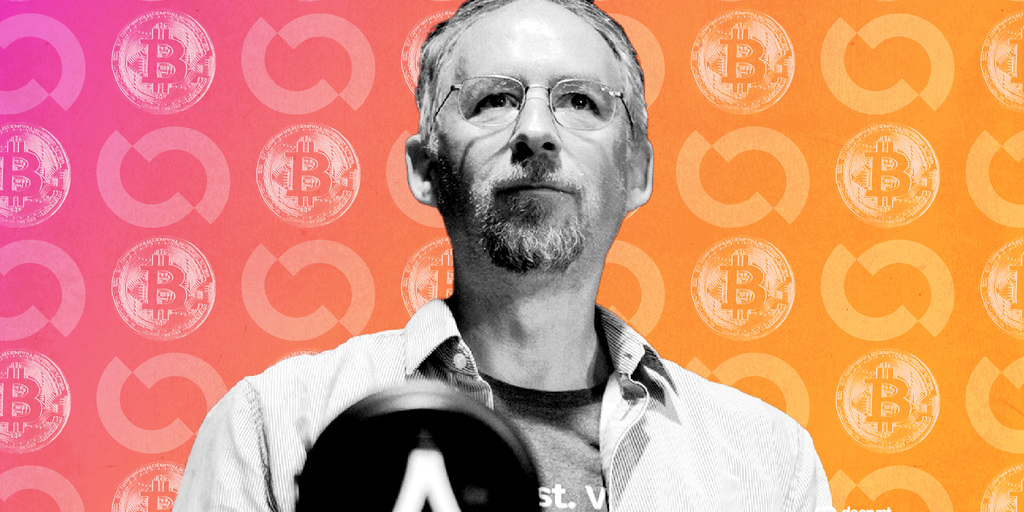
Adam Back pushed back—again—on claims he’s Satoshi Nakamoto, responding on X after a New York Times investigation by John Carreyrou concluded the Blockstream CEO is Bitcoin’s inventor. Carreyrou, a two-time Pulitzer winner known for exposing Theranos, spent 18 months on the case, surveying roughly 620 potential candidates and zeroing in through grammar analysis, repeated technical jargon, and writing tics across years of posts and emails.
Back’s reply was unequivocal: “I am not Satoshi,” adding that the overlap looks like “coincidence and similar phrases from people with similar experience and interests.” He also noted that Carreyrou surfaced the same early e-cash analogs Aaron van Wirdum chronicled in “Genesis Block”—peer-to-peer networking, BGP, and proof-of-work—ideas that many cypherpunks iterated on before Bitcoin.
The article’s core claims are familiar to anyone who’s followed this hunt: Back had early concerns about email spam that rhyme with Satoshi’s, possesses deep public-key cryptography expertise, and, according to the report, articulated several of Bitcoin’s foundational features before others. Carreyrou’s conclusion also drew on in-person interviews. In El Salvador, he says Back made a slip that aligned with Satoshi’s self-description as “better with code than words.” Back later said the broader context was his own verbosity on the Bitcoin development mailing list and called the interpretation an instance of confirmation bias.
Skepticism surfaced quickly. Bitwise president Teddy Fusaro quipped that it strains credulity to imagine Satoshi now running a Bitcoin treasury venture alongside Cantor Fitzgerald. The broader speculation isn’t new either: figures from Hal Finney and Nick Szabo to Dorian Nakamoto have worn the crown in the public imagination—none conclusively. Before his death in 2021, John McAfee even argued Back’s prose mirrored Satoshi’s via British spellings and spacing quirks, suggesting authorship software could “solve” it in minutes.
Here’s the point worth focusing on: stylometry is a blunt instrument in a community that converged on the same lexicon, memes, and problems. Cypherpunks solved similar puzzles, cited one another, and cross-pollinated language for years. When technical subcultures share idioms, error patterns, and preferred jargon, authorship signals get noisy fast. Two-space habits and British spellings are weak priors; so are recurring phrases across a mailing list where contributors adapted each other’s frames. Even if you could isolate prose style, Satoshi’s white paper, forum posts, and emails may reflect edits, collaboration, or intentional obfuscation—further muddying attribution.
Markets also shouldn’t price unverified identity theories. The only credible evidentiary standards in Bitcoin are cryptographic: a signed message from keys known to control early coins or movement of well-attributed Satoshi-era outputs. Short of that, we’re dealing with probabilistic narratives that often overfit on convenient datapoints and underweight the base rate of false positives when scanning hundreds of suspects.
There’s another practical layer: incentives. For someone plausibly in the blast radius of the Satoshi myth, outing themselves would invite legal exposure, political pressure, and perpetual security risk—costs that rarely align with any rational payoff. For operating companies, the distraction alone would be value-destructive. It’s no surprise Back is distancing himself, particularly as his profile has been dragged into unrelated controversies, from an invitation to Jeffrey Epstein’s island to U.S. Department of Justice files showing Epstein invested in Blockstream, the Bitcoin infrastructure company Back co-founded and now leads.
The fascination won’t fade—Bitcoin turned 17 this year and the mystery still drives headlines—but proof-of-work beats proof-by-prose. Until someone signs from a Satoshi-linked key or moves canonical early coins, identity claims—no matter how artfully assembled—are thesis, not settlement.