
Bitcoin Miners’ AI Pivot Exposes a Valuation Gap—and a New Role in the Power Grid
VanEck’s Matthew Sigel says Bitcoin miners can repurpose power and sites for AI at scale, offering grid flexibility and trading at discounts to data-center peers as BTC holds a range.
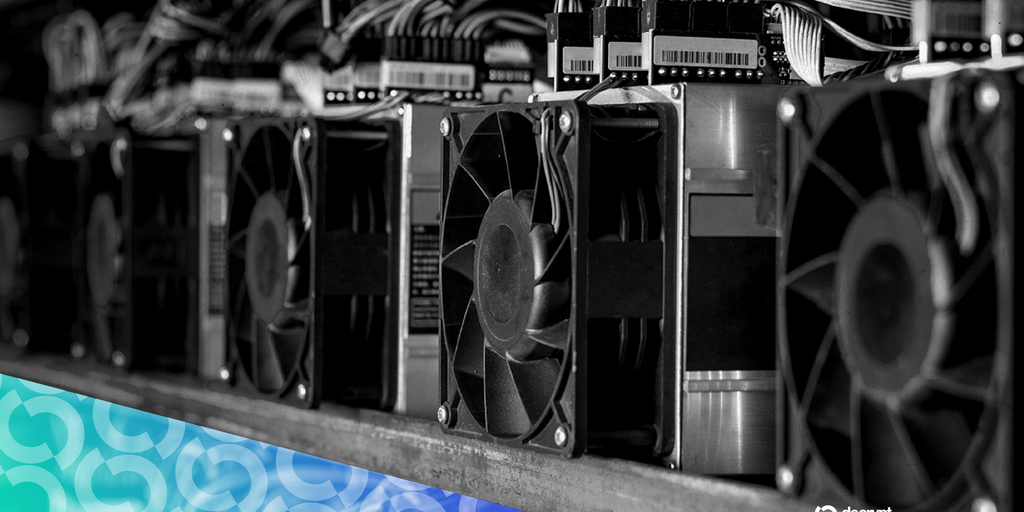

Because Bitcoin
March 12, 2026
The market keeps mispricing one thing about Bitcoin miners: their operating leverage to power and real estate. As artificial intelligence drives an acute land-and-electricity scramble, miners look less like commodity hash producers and more like underappreciated infrastructure owners that can re-rate toward data-center multiples.
That’s the core of Matthew Sigel’s argument. He noted that miners moved quickly to reallocate capacity toward AI compute and grid services, recognizing that their cheapest asset isn’t ASICs—it’s energized land, interconnects, substations, and power contracts. On a market-cap per megawatt view, he said these companies still trade at a steep discount to traditional data-center operators despite converging business models.
Why this matters now - Conversion economics are improving. Retrofitting with high-density cooling and networking is capital-intensive, but miners already control permitted, power-ready campuses with curtailment experience. That shortens timelines versus greenfield builds, where interconnect queues can stretch years. - Flexibility is the feature. Miners can throttle load within minutes, a property AI loads rarely have. Sigel highlighted that this makes miners useful for grid balancing as demand rises from reshoring, AI, and even directed-energy defense systems that require high-intensity electricity. In tight hours, miners can power down without customer SLAs, absorbing volatility that other tenants can’t. - The narrative gap persists. Equity investors often frame miners as pure Bitcoin beta with hardware depreciation risk, not as power-first businesses with optionality. That framing suppresses multiples until consistent AI revenues, fixed-price power spreads, and long-dated offtakes reset expectations.
You can already see the transition: - Marathon (MARA) agreed in February to convert mining sites into hyperscale data-center campuses. - Core Scientific secured up to $1 billion in financing from Morgan Stanley to accelerate its AI infrastructure buildout.
There are trade-offs. Technically, AI buildouts require different cooling envelopes, fiber, and security. Commercially, hyperscaler contracts shift revenue timing and margin profiles. Ethically, repurposing load raises questions about who gets priority on constrained grids—miners argue their interruptibility is net-positive, but communities will test that claim. The prize is clear, though: diversified cash flows and better cost of capital if markets start pricing miners as flexible compute and energy assets rather than single-commodity producers.
On Bitcoin itself, Sigel expects price to remain rangebound near term, roughly $59,000 to $72,000, with macro liquidity in the driver’s seat. Oil shocks or geopolitical stress could tighten conditions and weigh on risk assets, crypto included. Selling by longer-term holders appears to have cooled in recent weeks after profit-taking around the four-year cycle, which may be adding some stability. On prediction platform Myriad (owned by Dastan), users are split—assigning roughly a 50% chance that the next leg targets $84,000 instead of $55,000. Per CoinGecko, Bitcoin trades around $70,120, up about 0.9% on the day.
If AI demand continues to outpace new power and interconnect supply, miners’ optionality—curtailment, energized land, and rapid reconfiguration—could become the wedge that closes the valuation gap with conventional data centers.