
Bitcoin on Offense, Gold on Defense: Bitwise’s Portfolio Framing Gains Traction
Bitwise’s Bradley Duke says gold cushions drawdowns while Bitcoin powers rebounds. With ETFs dwarfing issuance, the halving cycle fades as BTC matures into a macro asset.

Because Bitcoin
February 7, 2026
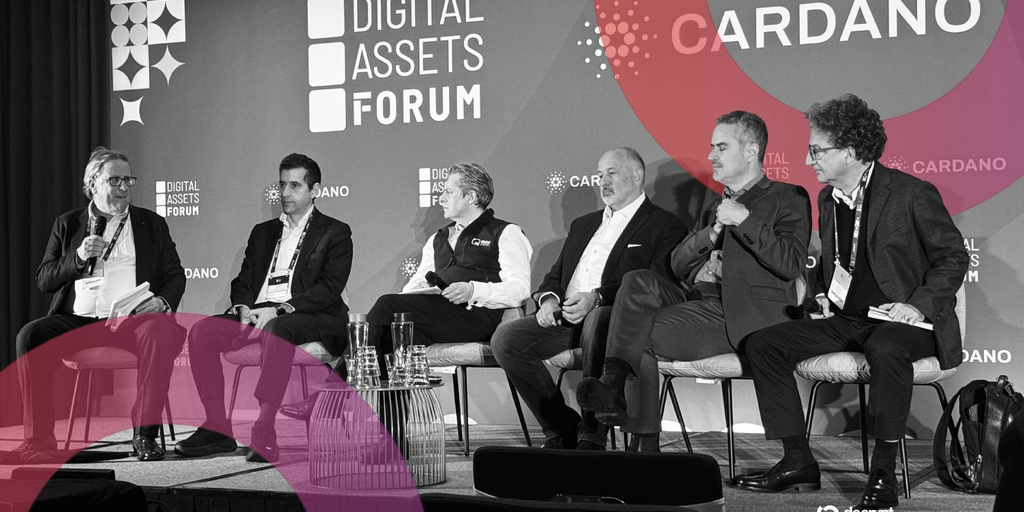
Investors keep forcing Bitcoin into gold’s lane. That framing misses the point. At the Digital Assets Forum in London, Bitwise’s Bradley Duke distilled a cleaner playbook: treat gold as your drawdown shield and Bitcoin as your rebound torque. It’s an offensive–defensive pairing, not a substitution.
The timing underscored the message. During the panel—centered on whether crypto’s four‑year cycle still matters—Bitcoin briefly slid toward $60,000. Meanwhile, the old safe haven has been on a tear: gold is up roughly 46% over the past six months to fresh highs, while BTC is down about 40% in the same window. That divergence has dented the “digital gold” shorthand. Duke’s explanation was sober: investor “muscle memory” drives capital to an asset trusted for millennia when uncertainty spikes. Building equivalent trust in Bitcoin takes time, despite its superior upside in recoveries.
I’d focus on why this offense–defense split resonates in today’s market structure. The halving used to anchor Bitcoin narratives because issuance shocks dominated marginal flows. That center of gravity is shifting. With the majority of the 21 million cap already circulating, supply cuts are smaller in absolute terms. More importantly, exchange‑traded fund demand, basis trades, and corporate treasury buys now swamp new coin production. As Nickel Digital’s Anatoly Crachilov put it, issuance is being dwarfed by ETF flows. That blunts the halving’s impact and nudges BTC toward macro-asset status—less about block rewards, more about liquidity cycles, policy, and positioning.
This evolution changes portfolio construction. Gold remains the cleaner hedge for acute drawdowns—liquid, familiar, and institutionally scalable. Bitcoin offers asymmetric convexity in expansions, particularly when risk appetite and liquidity return. Held together, they diversify failure modes: one mitigates left‑tail risk, the other amplifies right‑tail outcomes. The catch is behavioral. Allocators often over‑rotate into gold at precisely the moment Bitcoin’s forward returns improve, and underweight gold just when a cushion is most valuable. A rules‑based rebalancing between the two can counter that bias.
The panel captured Bitcoin’s maturation arc. Duke framed BTC as “bootstrapping” into a long‑term macro asset; early adopters were cypherpunks, but today even sovereigns are buyers. Matthew Le Merle of Fifth Era flagged a different constraint: talent. There are only a few thousand elite blockchain developers globally, and many could be siphoned into AI. Turning Bitcoin into a truly global peer‑to‑peer cash system demands sustained builder attention—far more important than trying to trade a perceived four‑year rhythm. If you’re just chasing the cycle for a quick trade, you’re looking at the wrong horizon.
Market expectations reflect the tug‑of‑war with gold. On prediction platform Myriad, owned by Dastan, users assign roughly 67% odds that BTC’s next move leaves it priced closer to 10 ounces of gold rather than 30. That sentiment aligns with a cautious, defense‑first posture even as some investors prepare for offense.
None of this argues for abandoning the halving entirely; it still shapes miner economics. But in a regime where ETFs intermediate retail and institutional flows, issuance is no longer the primary narrative driver. The smarter lens is regime‑aware offense and defense. Gold absorbs the shock. Bitcoin monetizes the recovery. Allocators who internalize that split—and systematize how they rebalance between the two—will navigate the noise with fewer unforced errors.