
Bitcoin stalls near $71K as profit-taking meets war risk; Morgan Stanley plots tokenization push, new quantum-safe idea surfaces, CFTC asserts authority, Sun vs. WLFI erupts
Bitcoin slips from $73K to $71K as $20M/hour profit-taking and Iran tensions bite. Morgan Stanley eyes tokenized funds and BTC yield; quantum-safe workaround, CFTC’s power move, and WLFI drama round out a volatile weekend.

Because Bitcoin
April 13, 2026
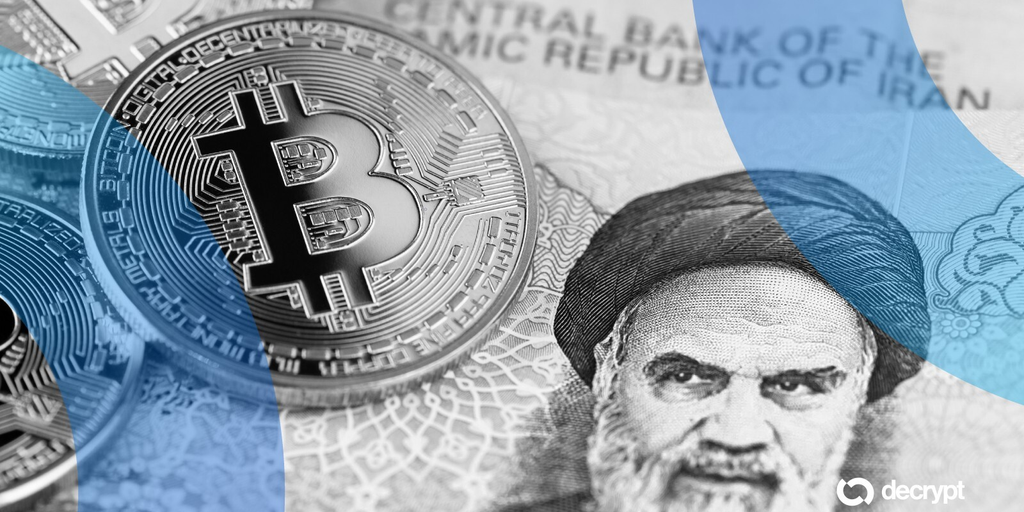
Bitcoin’s latest rally ran into a familiar obstacle: heavy supply overhead right as macro risk reappeared. As Iran talks broke down and a U.S. naval blockade of the Strait of Hormuz was announced, BTC slid from above $73,000 to roughly $71,000 and ETH faded from over $2,300 to below $2,200. Oil jumped 7% to about $97, with WTI briefly puncturing $100 on Hyperliquid.
The real tell isn’t the headline move; it’s the posture of holders above $70,000. Glassnode data shows roughly $20 million per hour in realized profits in that zone. That cadence signals an overhang of supply from earlier buyers and systematic programs that are offloading into strength. It’s less panic, more machine-like de-risking: funds clipping gains into round-number resistance, miners opportunistically selling, and derivatives desks hedging inventory. Layer wartime volatility on top, and bids thin just when algos press the sell button. Until this cadence slows—or offsetting spot demand consistently absorbs it—the march toward $80,000 likely remains choppy.
What matters tactically is path and composition of flow. ETF inflows continue to help, but when geopolitical risk skews correlations higher, even strong passive demand can be outweighed intraday by programmatic selling and delta hedging. Traders often underestimate how these feedback loops—profit locks, options gamma, and liquidity gaps over weekends—can cap upside in otherwise healthy uptrends. The psychology is circular: visible rejection near highs invites more top-slicing, reinforcing the ceiling. Breaking it cleanly usually requires a catalyst that alters the flow mix (e.g., a volatility crush, large net spot buys, or a regime shift in miner/treasury behavior), not just good vibes.
Beyond price action, the weekend delivered consequential developments:
- Morgan Stanley isn’t stopping at a Bitcoin ETF. The bank’s digital asset lead Amy Oldenburg flagged a tokenized money market fund as “definitely a path forward,” following BlackRock’s $2.3 billion BUIDL into yield-bearing tokens. Parametric (a Morgan Stanley subsidiary) would explore crypto tax-loss harvesting. The firm is building Bitcoin yield and lending in-house rather than renting tech. ETH and SOL ETFs filed in January are still pending. E*TRADE crypto trading via Zero Hash remains slated for 1H 2026.
- A novel quantum-safe workaround for Bitcoin. StarkWare researcher Avihu Mordechai Levy proposed QSB, which uses hash-based puzzles and Lamport signatures within Bitcoin’s current 201-opcode limits. Users solve ~70 trillion attempts off-chain (GPU-feasible for a few hundred dollars), then broadcast a transaction with proof—no fork required. Caveats are material: transactions are non-standard under current relay policies, likely bypass the public mempool to mining pools, are expensive, and Grover’s algorithm risk persists. It’s a stopgap, not a replacement for a consensus change.
- CFTC draws a hard line on prediction markets. CFTC Chair Mike Selig said the agency will defend “exclusive regulatory authority” over prediction markets listed on CFTC-regulated venues—sports, politics, or otherwise. The Third Circuit ruled on April 6 that the Commodity Exchange Act grants exclusive federal jurisdiction over trades on designated contract markets, undermining state gaming regulators. The CFTC and DOJ sued Arizona, Connecticut, and Illinois on April 2 over their actions against Kalshi and Polymarket, and more states could follow. The Ninth Circuit (covering Nevada) hears a consolidated case next week.
- Justin Sun versus World Liberty Financial. Sun, who invested $75 million in WLFI, alleged the team embedded a backdoor blacklisting function letting it freeze or restrict token holders without notice. WLFI recently deposited 5 billion WLFI as collateral on Dolomite (co-founded by a WLFI adviser) and borrowed $75 million in stablecoins, fueling accusations of “selling without selling.” The backdrop: WLFI froze Sun’s wallet in September 2025, blocking 595 million unlocked tokens (~$107 million). Sun called for unlocking remaining tokens; WLFI said it has evidence and is ready for court. WLFI trades at $0.079 vs. the treasury’s $0.1507 average buyback—about 48% underwater—and fell 18% on the week.
Market and flows snapshot: - Crypto: BTC ~$70K; ETH $2,190; SOL $82; HYPE $41.60. Movers: Stable (+10%), VVV (+5%), AAVE (+5%). - Commodities: Oil +3% at $97; Gold flat near $4,724. - Structural flows: ~$20M/hour in BTC profit realization above $70K (Glassnode). - Notables: Alameda unstaked $16M in SOL (likely creditor-related). Exploiters minted 1B bridged DOT on Ethereum via a Hyperbridge vulnerability but netted only ~$250K on thin liquidity. - ETFs/treasuries: Bitcoin ETFs took in $240M net Friday, $816.9M for the week. ETH ETFs saw $64.9M Friday, $187M weekly. STRC volume equated to buy-power for 3,400+ BTC. - Memecoins: DOGE -1%, SHIB -1%, PEPE -1%, TRUMP +1%, PENGU -1%, SPX -1%, FARTCOIN -2%. On-chain: bull (+117%), neet (+43%), triplet (+24%), LOL (+24%). - NFTs: Punks -1% (27.65 ETH), Pudgy -1 (4.12 ETH), BAYC flat (6.39 ETH), Hypurr +1% (396 HYPE). Renga (+125%) and MAYC (+6%) outperformed. Adam Weitsman bought 2,000 Otherdeeds and 203 Kodas; now holds 8,500+ Otherdeeds.
For BTC, the takeaway is straightforward: geopolitical shocks are the spark, but the slow-burn ceiling is the deterministic sell flow above $70K. When that cadence wanes—or is cleanly overwhelmed by sustained spot demand—the path to $80K looks far less congested.