
BTC Pops, Crypto Equities Rip on Reports Iran’s President Is Willing to End War
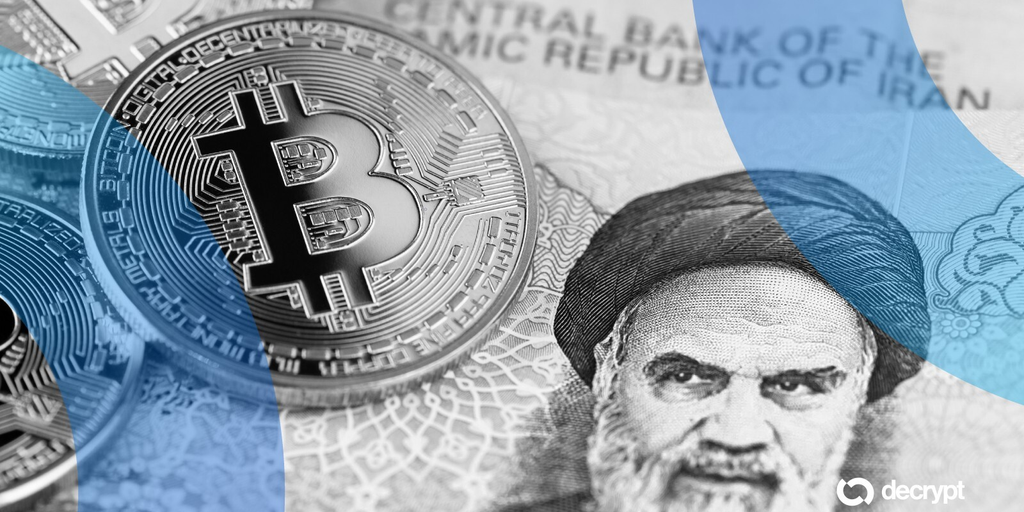
Bitcoin briefly topped $68K as Coinbase, Bitdeer, Nvidia and major US indices rallied after reports that Iran’s President Masoud Pezeshkian is willing to end the war, pending guarantees.

Because Bitcoin
March 31, 2026
Markets leaned risk-on Tuesday after fresh de-escalation headlines out of Iran, with crypto leading the move. Bitcoin spiked above $68,000 before easing, while Ethereum outperformed on the day. Crypto-tied equities saw sharp upside as traders rotated toward higher beta exposure.
By the numbers: - Bitcoin briefly pierced $68,000, then traded around $67,821, up about 1.9% from yesterday (CoinGecko). - Ethereum climbed roughly 3.5% to just under $2,100. - Coinbase rallied nearly 9% from the open to about $175. - Bitdeer jumped more than 12%, touching $8.98 before slipping to $8.88. - Nvidia gained around 5% to $173.80. - The Nasdaq rose 3.63%, the S&P 500 added 2.7%, and the Dow advanced 2.32% intraday.
What moved sentiment The first alerts surfaced at 12:45 p.m. ET via The Kobeissi Letter, followed minutes later by a Bloomberg push. Roughly an hour after the initial wire chatter, Iran’s English-language government account on X (described as the English version of the PadDolat account) amplified the message. In that post, the government said President Masoud Pezeshkian conveyed during a call with European Council President António Costa that Iran has the will to end the war if “necessary guarantees” are secured to prevent renewed aggression. Costa acknowledged the call on his own X account. Additional outlets, including The Economic Times and Euro News, cited a statement from the Iranian president’s office; a copy wasn’t available to review at publication time.
Context since the conflict began on February 28: - Bitcoin traded near $64,000 at the outset and has eked out modest gains since. - The S&P 500 and gold are down roughly 5.6% and 14%, respectively. - Oil has surged nearly 40% over the same window. - Crypto-related equities have often reacted most acutely to war headlines.
Where I’m focused: the reflex trade Geopolitical de-escalation headlines typically compress risk premia first in the most reflexive corners of the market—high-beta tech and crypto. You could see that today: BTC blipped higher, ETH tacked on a bit more, and crypto equities with operating leverage to volumes (Coinbase) or to compute and mining economics (Bitdeer) ripped as traders expressed directional risk quickly and with liquidity. Nvidia’s bid fit the same playbook—risk proxies, not just pure geopolitical hedges, caught flows.
This is where positioning and the information layer matter. Headline-reading algos fire instantly; discretionary traders then decide whether to fade or add based on source quality and follow-through. Today’s sequence—Kobeissi, Bloomberg, then an official English-language Iranian account referencing a call confirmed by Costa—offered just enough confirmation for systematic and fast money to chase without waiting for full-text communiqués. But it was qualified language (“provided that necessary guarantees are in place”), so spot reactions were brisk but not runaway.
The medium-term path still hinges on capital formation, not just ceasefire optics. As Lacie Zhang of Bitget Wallet noted earlier, a rapid de-escalation could unlock a stronger risk-on rally, with a scenario where Bitcoin probes above $90,000. That kind of extension, in my view, would likely require sustained institutional participation (ETF inflows, balance sheet buyers, real-money mandates) and clearer regulatory contours to convert a headline bounce into a durable trend. Without those inputs, geopolitics can change the slope of the move, but market structure—liquidity, basis, and vol supply—decides the length.
Two additional notes on signal quality: - Official communications can move billions before diplomats finalize terms. That’s efficient price discovery, but it puts a premium on verification and on understanding the incentives behind state messaging. - The White House hadn’t weighed in as of this writing, and President Donald Trump hadn’t addressed the remark on Truth Social. Midday, he instead posted a McLaughlin & Associates poll graphic showing 89% approval for his decision to use military force to remove Ayatollah Ali Khamenei—commentary that influences domestic risk perception but not the ceasefire headline itself.
What I’ll watch next: - Whether Iran or European officials publish a full statement with specifics around “guarantees.” - Oil’s reaction; a sustained pullback would validate de-escalation and reduce macro headwinds. - Crypto microstructure—funding, basis, and ETF flow—confirming if today’s pop transitions into trend rather than a headline fade.
For now, the tape reflected a classic “peace premium” bid. The market heard “willing to end the war,” not “war is over,” and it priced the difference accordingly.