Cramer Dumps Bitcoin on Quantum Fears—Markets Lean Into the Inverse Trade
Jim Cramer says he’s selling Bitcoin due to a looming quantum risk. Here’s why traders faded him, what IBM’s “verified quantum advantage” actually means, and the real migration path.

Because Bitcoin
August 5, 2026
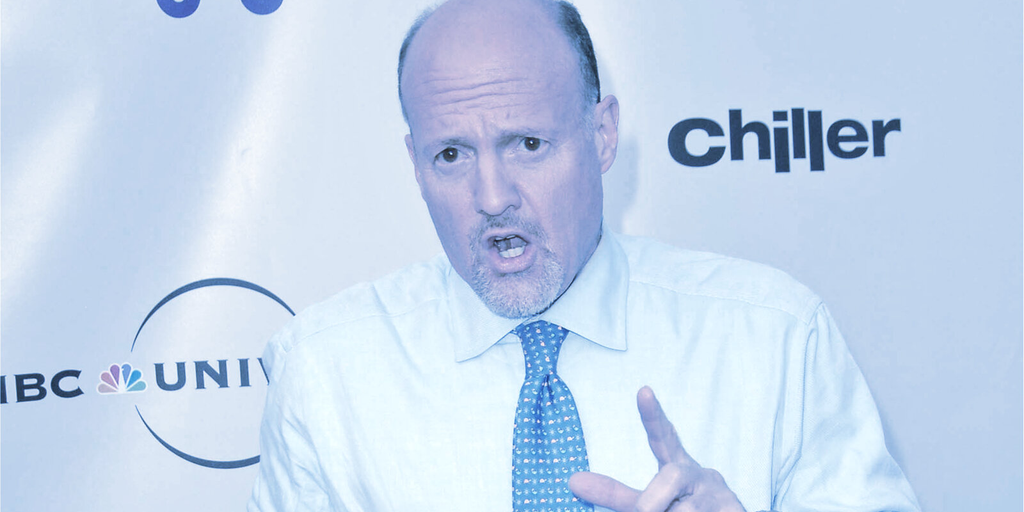
Jim Cramer has pivoted again—this time announcing he’s unloading his Bitcoin after a conversation with IBM CEO Arvind Krishna about quantum computing. Krishna suggested investors should start getting “paranoid” about crypto’s cryptography within three to four years. Cramer didn’t wait. He said he’s out, warned Ethereum could be even more exposed, and joked that “three to four years” might as well be tomorrow. The clip drew ~89,000 views on X and 9,000 on YouTube in short order.
Crypto Twitter reacted in a very familiar way: the “inverse Cramer” reflex kicked in. Documenting Bitcoin posted the segment; replies ranged from celebratory memes to users claiming they add to positions whenever he says “sell.” Accounts like @defidavo implied they’ve seen this movie before, @pixelord chimed in with GIFs, and @Btcbarbells said they’ve faded Cramer since 2018. The market even nudged higher—Bitcoin rose about 1.6% on the day he aired the plan—though no one has verified the size of his holdings or whether he owns any coins at all, since he hasn’t shared wallet addresses.
Here’s where the signal sits inside the noise: the risk Cramer flagged is real, but the timing is the entire ballgame.
IBM and University of Chicago researchers did just demonstrate a form of “verified quantum advantage” on July 30. Using 70 logical qubits and a fresh error-correction approach, they executed a computation in roughly 15 minutes that classical methods can’t feasibly reproduce and verified the result. That’s the Chicago work Cramer referenced. But sampling quantum circuits is not the same as breaking Bitcoin’s elliptic curve signatures. Those are different problems, and cracking ECDSA at scale would require machines far beyond anything disclosed.
Exposure still exists. Coinbase’s quantum advisory council has estimated that around 7 million BTC could eventually be at risk due to exposed public keys and address reuse—an operational nuance many early wallets didn’t optimize away. Ark Invest and Unchained characterize the threat as real but not imminent. Meanwhile, post-quantum signature standards already exist, and Bitcoin developers have debated migration paths for years.
This is the crux: timelines shape behavior. If you assume a three- to four-year window for meaningful cryptographic breakage, panic-selling looks rational. If you assume a longer curve—and believe the network can coordinate upgrades and rotate keys—then you prioritize hygiene (no address reuse, key rotation) while watching for credible upgrade proposals. Bitcoin’s ossification ethos slows change, but it doesn’t preclude it when the security model demands it.
The “inverse Cramer” layer is its own study in incentives. Traders have tracked his calls for years, to the point that Tuttle Capital launched two ETFs in 2023—one to fade his picks and one to follow them. The long fund shuttered first; the short fund closed in February 2024 with about $2 million in assets. As portfolio manager Matthew Tuttle put it, the goal was to highlight the risk of outsourcing decisions to TV stock-pickers and the lack of accountability. Cramer’s crypto record is why the meme persists: he declared he was out “for a million years” in December 2022 with Bitcoin near $16,796; over the next three years, BTC rallied more than 400%. He praised Bitcoin as a “technological marvel” in January 2024, then turned bearish again around last Christmas—when tracker Unbias logged his calls as fully negative while price hovered near $87,500.
I don’t view Krishna’s caution as alarmism; it’s prudent. I do view Cramer’s compressed timeline as a trading catalyst rather than a base case. The likely path is iterative: harden wallets, reduce key exposure, build consensus toward post-quantum signatures, and sequence any network changes with extreme care. Markets often reward that steadiness over the headline chase. In this instance, they did what they often do when Cramer sells: they took the other side.