Cuban Exits Most of His Bitcoin as Gold Outperforms; Quantum Fix Pitched for Satoshi’s Coins; Crypto Markets Mixed
Mark Cuban sells most of his BTC after gold’s surge, a new quantum defense aims to shield Satoshi’s 1.1M coins, and HYPE leads while majors trade sideways. Full market rundown inside.

Because Bitcoin
May 22, 2026
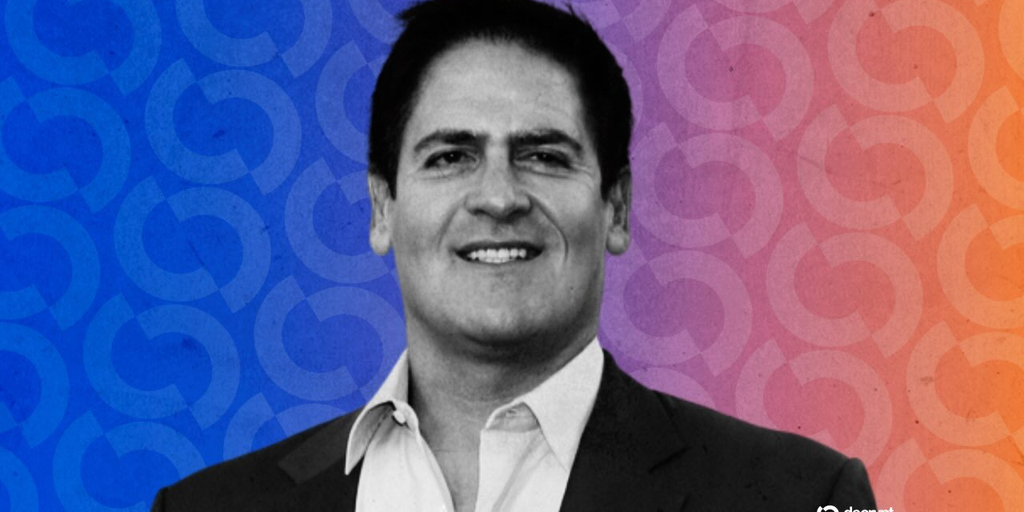
Bitcoin just lost one of its higher-profile champions. Mark Cuban said he unloaded most of his BTC after watching gold rip while Bitcoin faded during dollar weakness and Middle East tensions. He long framed BTC as a superior store-of-value, yet the recent rally in gold to $5,000 alongside Bitcoin’s stall was his breaking point. He also voiced fatigue with crypto’s lack of a mass-market, everyday app and called NFTs “disappointing,” capturing a mood we’re seeing as 5–10 year holders capitulate into 2026.
The single question worth interrogating: why did the “digital gold” hedge underdeliver when it should have worked? In short, regime dependency. Bitcoin’s hedge behavior often rides on liquidity, positioning, and reflexive narrative strength—not just macro variables in isolation. During the Iran flare-up, gold’s deep, institutionally embedded demand reflexively kicked in; BTC, despite ETF-driven legitimacy, still behaves like a high-beta liquidity asset during stress windows. When dollar softness coincides with growth scares or deleveraging, BTC can trade with risk assets rather than against them. That doesn’t invalidate the store-of-value arc, but it does compress the timeline and narrows the set of catalysts that unlock it.
Cuban’s critique on utility matters more than the gold comparison. Without a mainstream, habitual use case, the marginal buyer remains speculative and pro‑cyclical. Builders focused on reusable rollup tooling, points programs, and meme velocity created bursts of attention but not durable daily habits. From a business lens, the opportunity is still there—payments, settlement, market infrastructure, and identity remain under‑served—but the on‑ramp must be invisible, safer, and cheaper for “non‑crypto” users. Until that happens, price action will be dominated by liquidity cycles and narrative oscillations, not macro hedging purity.
Market snapshot - Majors: BTC flat near $77,000; ETH +1% at $2,130; SOL +2% at $88; HYPE +5% at $61 (new ATH over $62 yesterday) - Top movers: NEAR +32%; FET +13%; TIA +13%; WLD +13% - Commodities: Oil -2% at $98.50; Gold flat at $4,513 - Equities: Futures green; Nasdaq slightly higher as the US and Iran signal some peace progress
Flows, treasuries, ETFs - Spot Bitcoin ETFs: -$100M net outflows Thursday - Spot Ether ETFs: -$33M outflows - HYPE ETFs: +$16M net inflows Thursday; nearing ~$70M cumulative
Listings, funding, and corporate - Blockchain.com confidentially filed an S‑1 with the SEC for a US IPO expected before year‑end; previously explored a $14B valuation in 2022 before a 2023 Series E reset that figure lower
Infrastructure and protocols - Syndicate Labs (backed by a16z) is shutting down after five years building Ethereum rollup developer tooling, citing a structural collapse in demand for reusable rollup infrastructure - MegaETH is winding down its Terminal program and ending its points season early - Polymarket experienced a private key exploit of ~$700k earlier today; situation developing
Legal and market structure - Terraform Labs’ bankruptcy administrator filed an amended complaint alleging Jane Street received non‑public TerraUSD health information via a private Telegram group, “Bryce’s Secret,” run by a former Terraform intern who later joined Jane Street—then sold its full $192M UST position on May 7, 2022, hours before the depeg
Quantum security watch - Researchers at AmericanFortress floated a soft‑fork approach to wrap vulnerable addresses—including Satoshi’s ~1.1M BTC—in a protected dormancy state using layered post‑quantum signatures, avoiding forced migrations or owner proofs - Context: ~6.9M BTC with exposed public keys could be vulnerable if a quantum computer runs Shor’s algorithm against secp256k1 - Prior work: BIP‑361 (Jameson Lopp) proposed freezing non‑migrated coins; Charles Hoskinson noted 1.7M coins—including Satoshi’s—can’t migrate if keys are gone - Alternative: Dan Robinson’s PACTs would let holders timestamp proofs today and later unlock via STARK proofs if a freeze occurs - Status: AmericanFortress proposal is in early peer review, not yet a formal BIP
Memecoins and NFTs - Memes: DOGE +2%; SHIB +2%; PEPE +2%; PENGU +5%; TRUMP +5%; BONK +4%; SPX +4%; FARTCOIN +5% - Notable movers: Solana’s Worldcup +60%, Manifest +30%, Clude +30%; Base’s Supergemma +33x, grantr +160%, Pitch +67%, Robotmoney +50% - NFTs: Punks -1.5% at 33.5 ETH; BAYC -2% at 9.54 ETH; Pudgy -2% at 4.8 ETH; Hypurr’s -7% at 315 HYPE; Slonkz +16%; Milady +6%
Cuban’s sale doesn’t kill Bitcoin’s long-term thesis; it exposes how narrative alignment, product utility, and market microstructure still set the pace. Until crypto earns default consumer mindshare, its “hedge” will behave like a call option on future adoption—powerful when liquidity and belief are synchronized, underwhelming when they’re not.