
Delaware Moves to Outlaw Bitcoin ATMs, Ordering 90-Day Removal Amid Rising Fraud
Delaware advances House Bill 441 to ban crypto ATMs statewide, mandating immediate shutdowns and 90-day removal, citing high fees and a jump in FBI-reported kiosk fraud.

Because Bitcoin
June 10, 2026
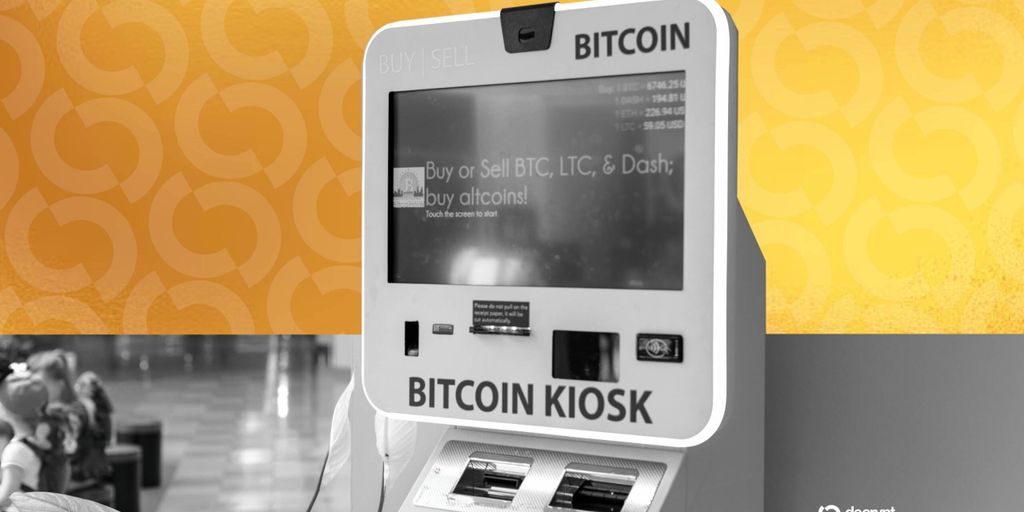
Delaware just took a hard stance on cash-to-crypto. Lawmakers advanced House Bill 441, a measure that would prohibit cryptocurrency kiosks across the state. If enacted, every machine must switch off at once and be physically taken out within 90 days—one of the broadest state actions to date, alongside recent bans in Indiana, Tennessee, and Minnesota. The bill now heads to the Senate.
Sponsors framed the move around consumer protection. Representative Cyndie Romer, who chairs the House Technology & Telecommunications Committee, pointed to the gulf between kiosk pricing and online exchanges: fees at crypto ATMs can reach roughly 20% per transaction, versus about 0.4% to 1% on mainstream platforms. Senator Spiros Mantzavinos called the approach a measured response to fraud tied to these terminals as digital assets become more common.
The data lawmakers cite is not subtle. The FBI recorded more than 13,400 complaints tied to cryptocurrency kiosks in 2025—up 23% year-over-year—with reported losses jumping 58%. Delaware’s Attorney General, Kathy Jennings, has warned that machines appearing as harmless convenience-store fixtures often function as a direct channel for scammers. AARP’s Delaware State Director, Lucretia Young, noted that older residents are frequently coached into moving cash into kiosks under the guise of protecting savings, helping relatives, or fixing fake emergencies—funds that are rarely recovered once converted.
Focus: the fee-and-friction design that makes kiosks a scam magnet - Economics: High kiosk fees are not an accident; they absorb cash handling, compliance, and chargeback risk in a setting without bank rails. That spread, however, also hands scammers a simple script: instruct a victim to pay “right now” at a nearby terminal, regardless of cost. When urgency trumps price, a 20% haircut becomes part of the con, not a deterrent. - Interface and flow: Cash-in, QR scan, send. The simplicity is the feature and the problem. Unlike exchanges that impose identity checks, address whitelists, or transfer delays, kiosks often allow rapid, irreversible transfers with limited context. Social engineers exploit that speed and the perceived legitimacy of a machine in a trusted retail location. - Policy trade-off: A total ban reduces that specific vector but may shift bad actors to gift cards, P2P cash meetups, or money mules—channels with similar psychology and fewer audit trails. On the other side, legitimate cash users—often underbanked—lose a regulated on-ramp and may be nudged into riskier informal markets. - What targeted guardrails could look like: Real-time scam prompts and “cooling-off” timers for first-time or high-dollar transactions; dynamic address risk scoring; transaction caps and fee transparency standardized at the kiosk; mandatory disclosures comparing kiosk vs exchange fees; and restrictions that limit withdrawals to custodial exchange deposit addresses. Several operators already experiment with these; making them uniform could cut harm without erasing the product category.
The broader picture: Thirty states have moved on kiosk regulation since 2023. Delaware’s proposal extends that momentum with a clean sweep approach—machines off immediately, then out the door within 90 days. If it passes, expect: - Rapid operator exits and possible litigation challenging proportionality and due process. - Migration of retail cash-to-crypto demand to neighboring states or to less supervised channels. - Retailers losing ancillary foot traffic, with minimal political downside given the fraud narrative and fee optics. - A policy template other states may copy, especially where elder fraud stories have salience.
Investors tend to dismiss ATMs as a niche, but cash rails influence the on/off-ramp mix that shapes market participation and perceived legitimacy. If Delaware finalizes the ban, we’ll learn whether erasing a high-friction on-ramp meaningfully reduces scams—or whether adversaries simply re-route while compliant users bear the loss of access. The next move sits with the Senate.