Heatbit Bitwater Turns Electric Water Heaters Into 34 TH/s Bitcoin Miners for $899
Heatbit’s Bitwater replaces a standard water-heater element with 20 BM1370 chips, delivering up to 34 TH/s on 600W. $899 refundable preorders ship in Q1 2027—here’s the trade-off.

Because Bitcoin
October 23, 2026
Bitcoin mining keeps drifting toward hyperscale racks and AI tie-ups. Heatbit is betting on the opposite: push hashrate into everyday appliances people already run. Its new Bitwater element drops 20 Bitcoin mining chips directly into your electric water heater, claiming you get the same hot water for the same electricity—and a trickle of BTC on top.
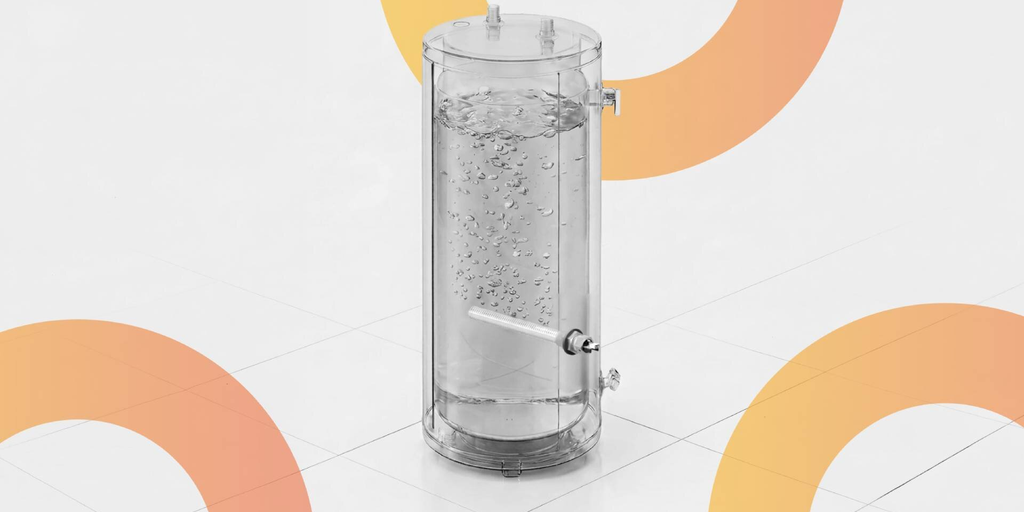
What it does and how it fits - Bitwater replaces the resistance wire in a standard electric water-heater element with 20 Bitmain BM1370 chips. - Rated up to 34 TH/s while drawing up to 600W at about 12 J/TH. - The tank’s water cools the chips, so it’s fanless and effectively silent. - Install is pitched as DIY: flip the breaker, drain the tank, remove the old element, and thread in Bitwater with the included wrench. - It uses the common 1-inch port found on 30–80 gallon electric tanks in the U.S. and Canada, with compatibility listed for A. O. Smith, Rheem, Bradford White, Whirlpool, and GE. No plumbing changes or new circuit required, per the company.
Because Bitwater’s 600W draw is far below the ~4,500W elements common in U.S. tanks, it heats more slowly but for longer. When you suddenly need more hot water, the tank’s existing upper element remains as a higher-power backup.
Control and payouts A companion app shows water temperature, hashrate, and estimated earnings. You can solo mine or join a pool, and payouts go to an address you control. Heatbit says the element is designed to run more than 80% of the time, with uptime tied to your household’s hot-water usage cycle.
Price, timeline, and testing - “Genesis” preorders are $899 and refundable; later batches may rise to $1,299. - First shipments are targeted for Q1 2027. - The company says it tested through winter with four- and five-person households in New York and Florida, and it teased a version for homes with gas water heaters.
Earnings reality check Heatbit hasn’t posted its own revenue model. It amplified xAI’s Grok estimate of roughly $1.00–$1.25 per day, with the caveat that estimates are not guarantees. Using Hashrate Index’s current hashprice figure of about $36.73 per PH/s per day, a Bitwater running at 34 TH/s would mine around $1.25 daily—roughly $455 per year—before any fees, and with outcomes moving alongside Bitcoin’s price and network difficulty.
Why the “heat you already buy” model matters Retail mining dies on power costs and noise. This design tackles both by pushing compute into a necessary heat load and dumping waste heat where you want it. If you’re heating water anyway, the economic lens shifts: you’re not competing with industrial farms on cents per kWh for discretionary mining; you’re repurposing mandatory energy spend. That reframing is the only retail moat that has persisted across cycles.
There are trade-offs. A 600W, 34 TH/s device is modest hashrate, and your duty cycle is constrained by household usage and tank thermostats. The longer, lower-power heat curve may be a feature for some homes and a mismatch for others. Installation is framed as DIY, but warranties, local codes, or insurer expectations may still matter. Still, fanless thermals and the lack of a dedicated circuit reduce the friction that usually kills home miners.
Decentralization pitch in context Heatbit argues that homes collectively use around 300 TWh per year on water heating—more than the entire Bitcoin network at about 170 TWh—so the addressable “heat sink” is large. That narrative lands at a moment when public miners are leaning into AI: roughly 17 deals worth over $110 billion have tied up about 6 GW of capacity with the likes of Google, Amazon, Microsoft, Nvidia, and CoreWeave. Bernstein expects AI revenue at covered miners to grow from about $1.2 billion in 2026 to $10.7 billion by 2030, and points to more than 27 GW of planned power capacity positioning miners as key AI suppliers. Those facilities typically need 24/7 uptime, whereas Bitcoin miners can curtail—Compass Mining has highlighted that interruptibility advantage. Home units like Bitwater inherit that same grid-friendly trait at household scale.
This isn’t a get-rich device. It’s an attempt to turn unavoidable residential energy into modest, programmatic BTC flow while dispersing hashrate. That direction aligns with Heatbit’s earlier space-heater miner (about $700 in 2023), whose founder argued the heater earns because it replaces an appliance you’d run anyway. If Bitwater proves durable and easy to live with, it nudges mining a little further from warehouses and a little closer to the utility closet.