
Iran Eyes Bitcoin Toll to Reopen Hormuz, But “Seconds-Only” Payments Don’t Add Up
Iran proposes a $1-per-barrel Bitcoin fee for oil tankers transiting the Strait of Hormuz after a ceasefire—seeking sanction resilience, but facing real-world and market frictions.

Because Bitcoin
April 8, 2026
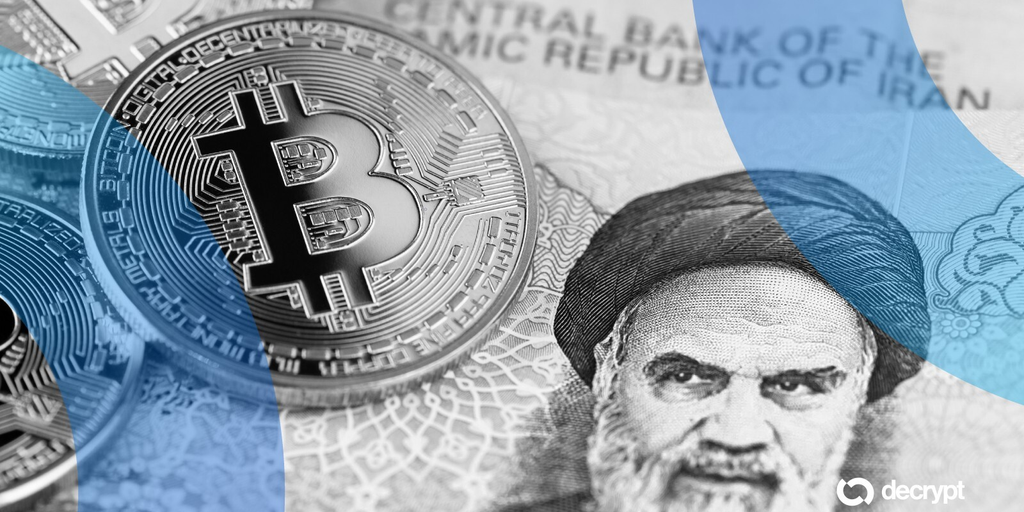
Iran is signaling that oil can flow again through the Strait of Hormuz—if ships pay Iran in Bitcoin. Under a plan set after a two-week ceasefire with the United States, Tehran would charge $1 for every barrel transported through the chokepoint, with payment required in BTC to an Iran-controlled wallet. Tankers would first email cargo details for approval, then have only “a few seconds” to remit the fee. Officials argue Bitcoin makes the toll harder to trace or seize under sanctions.
The design choice worth dissecting is the “seconds-only” Bitcoin window. That single constraint collides with how Bitcoin actually settles and how maritime operations function under sanctions pressure.
On-chain Bitcoin isn’t built for instant finality. Broadcast is near-instant, but economic finality takes confirmations that typically arrive in ~10-minute blocks—and can take longer under congestion. Zero-confirmation acceptance exists, but with Replace-By-Fee and double-spend risk, it’s generally reserved for small, low-stakes transactions. Here, a very large crude carrier could owe a seven-figure toll (a 2 million barrel load implies a $2 million BTC payment). Accepting that at zero-conf during geopolitical tension is a tall risk tolerance.
Lightning offers sub-second settlement, but its capacity and liquidity routing are not designed for sporadic, multi-million-dollar flows triggered by ships entering a strait. Channel limits, rebalancing needs, and the likelihood that counterparties avoid sanctioned exposure mean operators would struggle to push single-shot, high-value BTC over LN reliably. Pre-funded custodial rails could compress latency, but then Iran depends on intermediaries vulnerable to sanctions—undercutting the “can’t be confiscated” claim.
Operationally, “seconds” also clashes with shipboard reality. Tankers rely on variable connectivity, change course windows, and strict bridge procedures. For a CFO or charterer, wiring a volatile BTC amount on a seconds-long countdown—while also managing slippage, network fees, and address verification—introduces payment failure risk. If a toll is pegged at $1 per barrel, conversion timing matters: a 1% swing in BTC/USD during that window materially impacts cost on million-barrel cargoes. A failed or partial broadcast due to mempool spikes could strand a vessel at the gate.
The traceability argument deserves similar scrutiny. Bitcoin is transparent by default; firms routinely cluster addresses and link flows. Sanctions enforcement often happens at the off-ramps and via wallet blacklisting, not by “confiscating” on-chain funds mid-flight. BTC can be harder to seize than bank wires, but it’s simpler to trace. If Iran’s wallet addresses are identified, global compliance teams will flag them quickly. That pressures carriers, insurers, and P&I clubs, many of whom avoid even indirect sanctioned exposure. For ship operators, holding BTC treasury, policy sign-offs, and audit trails become nontrivial—especially when a state’s Supreme National Security Council dictates the terms.
Context heightens the stakes. Iran seized control of Hormuz after U.S. and Israeli attacks in late February; roughly a third of global crude flows through this narrow waterway, and the war has pushed oil prices sharply higher. Regional exporters like Saudi Arabia, the UAE, and Qatar are unlikely to accept a prolonged Iran-administered BTC toll. President Donald Trump floated to ABC News the idea of a U.S.-Iran “joint venture” on tolls—calling it “a beautiful thing”—but Iranian officials did not indicate any shared system.
If Iran proceeds, practical workarounds would likely emerge: pre-authorized BTC deposits, longer payment windows, or third-party agents netting and remitting on behalf of fleets. Each reduces real-time friction but increases exposure to secondary sanctions or reintroduces traceability. That feedback loop tends to push actors back toward the very chokepoints Bitcoin was meant to route around.
There’s a strategic signal here: tying passage through the world’s key oil artery to censorship-resistant money projects sovereignty in code. Yet the combination of seconds-level deadlines, high-ticket transfers, and sanctions-sensitive compliance looks more like a negotiating gambit than a scalable payments standard for Hormuz. Markets will price the difference between a headline and a settlement layer.
Key facts: - Iran proposes a $1-per-barrel BTC transit fee for oil tankers in the Strait of Hormuz. - Ships must email cargo details, await approval, then pay in BTC within “a few seconds.” - Officials say BTC helps avoid sanctions by making payments harder to trace or seize. - Terms were set by Iran’s Supreme National Security Council amid a two-week U.S.-Iran ceasefire. - Iran took control of the strait after U.S. and Israeli attacks in late February; about one-third of global crude passes there annually, with oil prices surging during the conflict. - Regional exporters are likely to resist prolonged Iranian control; Trump suggested a U.S.-Iran joint toll, which Iran did not endorse.