Ledger Brings Self-Custodial Bitcoin Loans to Its Wallet, Powered by Morpho
Ledger’s Crypto Loan lets users borrow USDC or USDT against cbBTC or wBTC with approvals on a hardware device. Morpho via Yield.xyz powers the feature, rolling out now.

Because Bitcoin
October 7, 2026
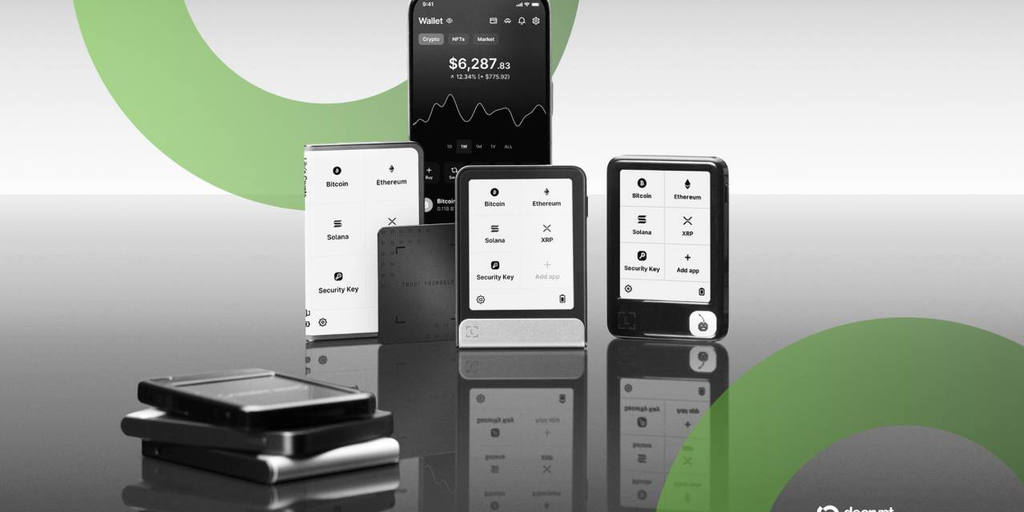
The quiet breakthrough here isn’t “another BTC loan.” It’s moving credit into the same flow as cold storage—every critical action gated by a hardware-signing step. Unveiled at TOKEN2049 Singapore, Ledger’s new Crypto Loan puts wrapped Bitcoin to work as collateral for stablecoin liquidity, without routing funds through a centralized desk or handing over keys.
Here’s what’s live - Asset scope: Eligible users can pledge cbBTC or wBTC to borrow USDC or USDT. - Self-custody first: Final approvals occur on a Ledger signer; users open, adjust, and repay loans inside Ledger Wallet. - Protocol rail: The credit line runs on Morpho, with technical integration via Yield.xyz—the same provider supporting Coinbase’s Bitcoin-backed loans. - Direct protocol access: Ledger devices now connect to Morpho without browser extensions or software wallets. - Rollout: Available immediately to eligible users, with broader access expanding over time.
What matters is the hardware-gated UX Bridging DeFi credit into a hardware wallet alters user behavior. Many long-term holders are reluctant to park collateral on web wallets or browser extensions that can be phished, spoofed, or mis-signed. Forcing high-impact actions—open, draw, top-up, repay—through the physical signer compresses attack surface and aligns the mental model of “I move coins only when I hold the device” with “I move debt only when I hold the device.” That subtle shift can raise trust without sacrificing permissionless rails.
A tighter liquidity loop Morpho’s pools can be funded by stablecoins deposited through Ledger’s existing Earn product, creating the “liquidity flywheel” the protocol’s team has promoted: depositors seek yield; BTC holders seek dollars; the wallet aggregates both sides. If it scales, Ledger evolves from being a vault to a liquidity router, capturing more touchpoints—and data—across the credit lifecycle.
Competitive context The push lands Ledger alongside firms leaning into Bitcoin-backed credit. Coinbase recently rolled out fixed-rate BTC loans, including in the U.K., and JPMorgan has explored lending against Bitcoin and Ethereum. The appeal is familiar: users who expect appreciation would rather borrow than crystallize a taxable sale. The risk is just as standard: swift drawdowns can trigger liquidation if loan-to-value isn’t maintained.
Risk design should be the obsession - LTV ergonomics: Clear collateral health indicators, rapid top-up flows, and pre-set alerting matter when BTC whipsaws. Ledger’s in-app LTV tracking is necessary; whether it’s sufficient depends on how aggressively the product nudges users during volatility. - Collateral choice: Supporting cbBTC and wBTC introduces bridge and smart contract exposure on top of market risk. Hardware confirmation helps, but it can’t mitigate protocol-layer failures. - Self-custody trade-offs: Users retain final approval, which is powerful psychologically. It can also foster overconfidence and encourage leverage if the UX downplays tail risk. Transparent fee, oracle, and liquidation parameters should live one tap away on the signer confirmation screen, not just the app.
Business implications for Ledger Ledger says it secures nearly 30% of all Bitcoin held by retail investors. Converting that footprint into a services franchise—credit, yield, direct protocol access—diversifies revenue beyond devices and deepens lock-in. It also raises a governance bar: when a hardware vendor becomes a lender’s front end, disclosures, incident response, and conflict-of-interest policies need to match financial-product expectations, not just consumer electronics norms.
Market snapshot at publication Bitcoin traded near $83,740, down about 1.82% on the day, with a 24-hour high of $86,648, a low of $83,610, and roughly $1.6 billion in volume. Prediction markets on Myriad implied about a 54% chance BTC would spend the week below $84,000—hardly a crisis, but enough chop to test liquidation rails.
A brand flourish was tucked in as well: a limited-edition Nano Gen5 signer co-branded with the NBA’s San Antonio Spurs (250 units), extending a partnership announced last year. It’s marketing, yes, but it also normalizes the idea that a hardware signer is a consumer finance gateway, not just a cold vault.
If Ledger gets the risk UX right, hardware-anchored, on-chain credit could become the default way many BTC holders access dollars—simple enough for daily use, conservative enough to survive volatility.