
Mark Cuban Offloads Most of His Bitcoin, Citing Hedge Failure as Gold Soars
Mark Cuban says he sold most of his Bitcoin after it failed to hedge inflation, while gold rallied. He also slams meme coins and calls NFTs a letdown amid shifting crypto narratives.

Because Bitcoin
May 21, 2026
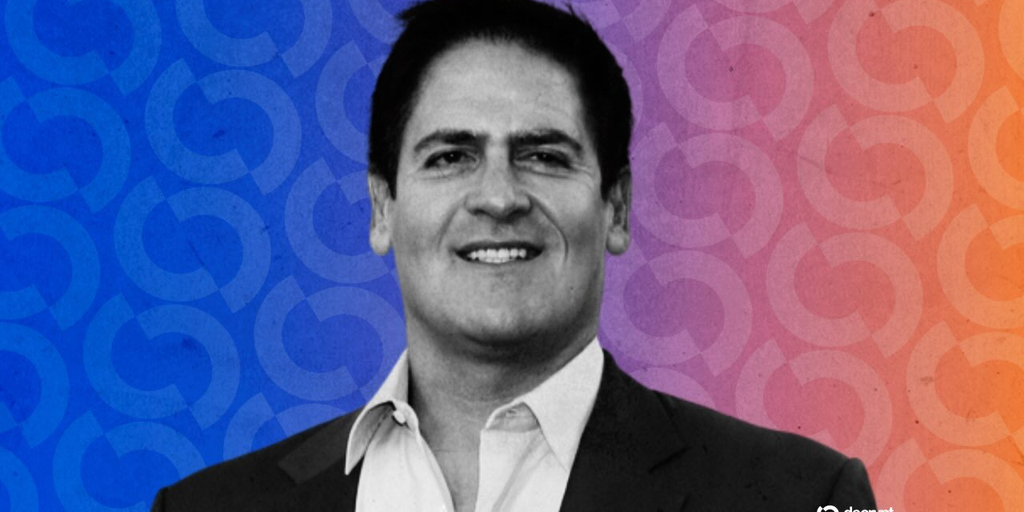
Mark Cuban has pivoted hard on Bitcoin. In a new interview, the billionaire investor said he parted with most of his BTC after deciding the asset hasn’t behaved like the inflation hedge he expected—particularly while geopolitical risk rose and gold ripped higher.
Here’s the core of his critique: he once viewed Bitcoin as a superior version of gold. Instead, during a period marked by macro volatility and the war in Iran, gold surged and Bitcoin sagged. Cuban argued that when the dollar softened, Bitcoin should have climbed; it didn’t, in his view. That outcome led him to reduce his exposure substantially.
The tape backs up his frustration. Bitcoin traded around $77,672 on Thursday, down roughly 29% over the past year and sitting 38.4% below its October all-time high of $126,080. Gold, meanwhile, recently changed hands near $4,548—up more than 37% year-over-year—and, despite a pullback of over 17% since topping $5,500 earlier this year, still anchors the largest market cap of any asset at north of $31 trillion.
The more interesting question isn’t whether Cuban trimmed; it’s why the hedge story let him down. Bitcoin’s inflation-hedge meme often works on decade-long horizons but breaks down tactically. In practice, BTC trades like a high-beta liquidity asset: when real rates rise, volatility spikes, or de-risking cascades, it frequently correlates with risk assets. Gold benefits from entrenched central bank demand, deep collateral markets, and a multi-trillion-dollar base that dampens reflexivity. Bitcoin’s holder mix is newer, more levered, and more momentum-sensitive. That structure can overwhelm the “digital gold” narrative in the short run, especially when derivatives positioning, ETF flows, and funding dynamics are doing the talking.
There’s also a behavioral layer. Investors anchor on simple if-then rules—“weaker dollar, Bitcoin up”—and then overfit them to every regime. Cross-asset relationships evolve. Correlations flip with liquidity conditions, not headlines. When influential figures publicly re-rate assets, it widens the gap between the meme and the market, and traders who treated BTC as a mechanical hedge feel whipsawed.
Cuban’s skepticism extends beyond Bitcoin. He said he’s cooled on NFTs—calling the category disappointing rather than dead—and argued crypto still lacks an everyday “grandma-ready” application. He’s also distanced himself from the speculative fringe, labeling “token stuff” and meme coins as trash after previously kicking the tires on launching one. That’s a notable turn from his earlier stance: he was an outspoken NFT advocate who showcased his wallets, and a Dogecoin booster who highlighted its spendability versus Bitcoin. In 2021, under his ownership, the Dallas Mavericks accepted DOGE for merchandise, and he even mused that Dogecoin could behave like a quasi-stablecoin near $1.
What should market participants take from this? Treat “Bitcoin-as-hedge” as a thesis with time-dependency and plumbing risk. In some cycles, BTC can lead gold on inflation impulses; in others, it trades like long-duration tech. The differentiator is positioning, liquidity, and the marginal buyer—not slogans. If your mandate is wealth preservation, gold’s structural demand and scale may feel steadier. If your mandate is convexity to future monetary debasement and open, bearer-based rails, Bitcoin still offers a unique profile—but the path will be choppy, and the driver set is not the same as bullion’s.
Cuban’s reversal is a reminder: narratives sell quickly, repricing happens faster, and utility that resonates beyond crypto-natives remains the missing catalyst. Until that everyday application arrives, Bitcoin’s store-of-value case will continue to be judged in volatile, regime-specific snapshots rather than by a straight line from theory to performance.