
Razzlekhan to Drop ‘Turki$h Martha’ as Release Nears in Bitfinex Bitcoin Hack Case
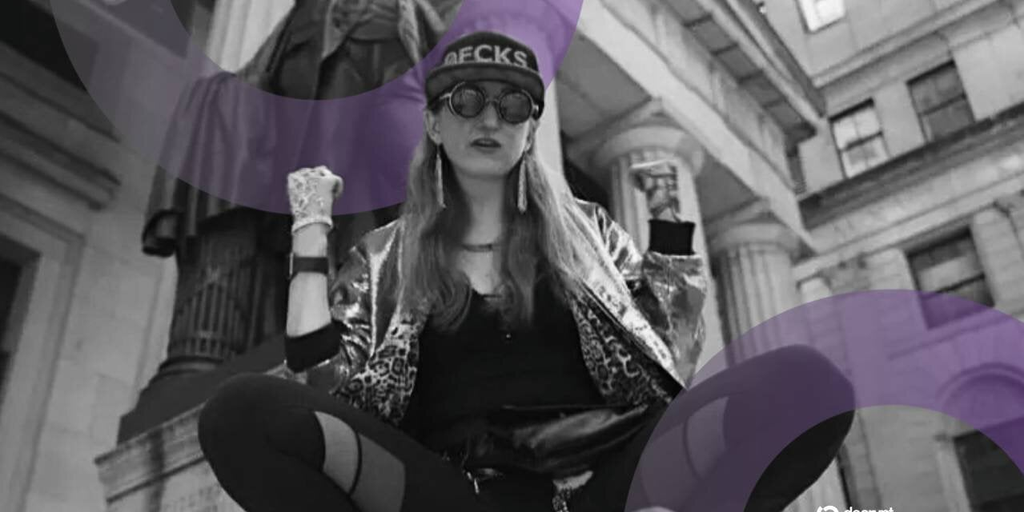
Heather “Razzlekhan” Morgan plans to release ‘Turki$h Martha’ this week as she approaches a Dec. 28 release after an 18-month sentence tied to laundering Bitfinex hack funds.

Because Bitcoin
November 17, 2025
Heather “Razzlekhan” Morgan is stepping back into the public eye with a new track, positioning her persona where crypto notoriety and pop culture intersect. The 35-year-old rapper and influencer—serving an 18-month sentence for laundering funds linked to the 2016 Bitfinex breach—is transitioning out of federal custody under a residential reentry management office in Sacramento and is slated for full release on December 28.
Her first post-imprisonment song, expected Friday and titled “Turki$h Martha,” has been teased online. Morgan said in a November 12 post that officers and inmates at Victorville repeatedly asked her to perform it during her incarceration, and she noted she needed a clean version to share through TRULINKS/Keefe. A clip shows her rapping in an Ottoman-style war helmet beside another performer. Snippets nod to a Harlem Shake punchline, a preference for baklava over cake, and explicit “home alone” themes; lyrics posted separately reference smoking hashish, making standout lentil soup, an “inverse twerk,” baksheesh, and a Bedouin callback to earlier work.
Morgan pleaded guilty in 2024 and received her sentence that November for laundering a portion of roughly 119,000 BTC stolen in the Bitfinex hack—one of crypto’s largest thefts. Federal authorities have recovered the majority of the coins, now valued at more than $11 billion. Her husband, Ilya Lichtenstein, was sentenced to five years for money laundering and has claimed responsibility for the hack itself. In a later video call, he asserted Morgan was unaware of the theft during the years it remained unsolved. Her management did not respond to a request for comment.
The pivot back to music is consistent with a brand she cultivated long before the 2022 arrests: rap videos, hustle-minded advice, and travel-centric lifestyle content spanning Turkey, Hong Kong, South Korea, Japan, Egypt, and the U.S. She studied at Bilkent University in Ankara on exchange, and cast “Razzlekhan” as “Genghis Khan with flair.” Older videos—revived by the case—featured lines like “crocodile of Wall Street” and “Versace Bedouin.” Leading up to sentencing in 2023–2024, she released a song about the strain of looming prison time and remained active on Cameo as “crypto’s favorite felon.”
What matters here isn’t a novelty single—it’s the incentive structure. Crypto’s biggest scandals don’t just end in court; they often reappear as entertainment assets. The attention economy rewards transgression with algorithmic distribution, turning legal infamy into cultural inventory. That creates a loop: the more memorable the narrative, the more likely it is to monetize—through streams, merch, shout-outs, and bookings—regardless of restitution or reputational damage to the industry.
There’s a technology undertone that gets lost in the spectacle. The Bitfinex recovery underscores how traceable Bitcoin is; on-chain forensics, patient pressure, and custody missteps can unwind even sprawling laundering efforts. That tension—Bitcoin as both a transparent ledger and a vehicle criminals still attempt to exploit—rarely makes the headlines compared to a viral music video. For institutions on the fence, the lesson isn’t that crypto enables perfect anonymity; it’s that law enforcement has become adept at following the money, and high-profile recoveries are evidence.
From a business lens, this release is a test of whether post-conviction personas can sustain audience demand without alienating potential partners. Some listeners seek closure or curiosity; others recoil at perceived glorification. Ethically, the optics are thorny: victims of the hack exist, and any commercial upside built on a case of this size invites scrutiny. Yet audiences often compartmentalize, especially when the content is self-aware and catchy.
“Turki$h Martha” will get clicks. Whether it converts into a durable creative arc—or just extends a news cycle—depends on how she navigates accountability and taste, and on how crypto’s culture decides to remember the Bitfinex era: as cautionary compliance fodder, or as meme-ready lore that still trends.