Saylor Reopens the Equity Window: Strategy Sells at $62k, Buys 4,603 BTC at $80k While Retiring STRC
Strategy flips funding back to equity, adds 4,603 BTC at $80,318, retires STRC, and raises cash. Market weighs dilution against balance-sheet strength as Q4 approaches.

Because Bitcoin
September 2, 2026
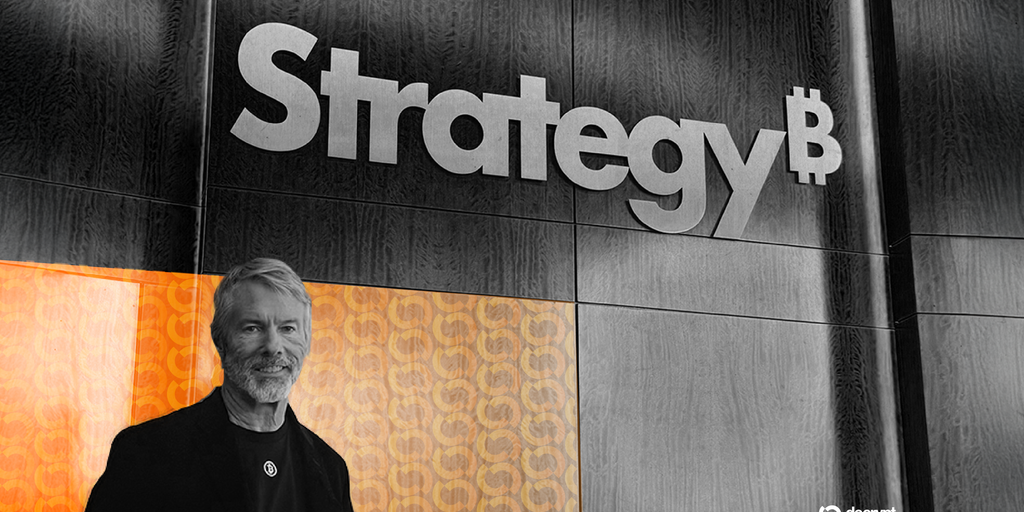
Bitcoin’s price wasn’t the headline. Strategy’s capital-structure pivot was. After a rare summer of selling 6,948 BTC at roughly $62,250 per coin (~$432.5M), the company reversed course Monday, purchasing 4,603 BTC for $369.7M at an average of $80,318—about 29% above its earlier sale price. Net, the stack remains 2,345 BTC lighter than in spring. The “why” matters more than the “where” they filled.
The fulcrum is STRC, the preferred instrument Strategy has been using—alongside MSTR equity—to finance Bitcoin accumulation. When STRC slipped below its $100 par in June, issuing more became uneconomic, so management greenlit a Digital Credit Capital Framework authorizing up to $1.25B of BTC sales to cover preferred dividends and repurchase discounted STRC. Equity issuance had effectively shut; selling coins became the bridge.
With MSTR recovering, equity reopened as the cheaper lever. Last week Strategy sold 4,531,421 MSTR shares for $602.8M net. Proceeds were split with intent: $369.7M to BTC, $151.8M to STRC buybacks, $50.7M to preferred dividends, and $30M to cash. The result: more Bitcoin than last week, fewer outstanding preferreds, and higher cash reserves—despite heavy dilution. MSTR still finished the week up ~5%, suggesting equity investors may be prioritizing balance-sheet durability and optionality over near-term per-share metrics.
This is classic treasury arbitrage: toggle between coin, preferreds, and common based on relative pricing. It isn’t about trading Bitcoin; it’s about minimizing the weighted average cost of capital for a perpetual BTC acquisition machine. Psychologically, the willingness to sell BTC when equity is shut and reload when equity is available signals process over dogma. Ethically, there’s a credible argument that meeting preferred obligations and buying them back at a discount is fair stewardship—provided common holders understand the dilution path. Operationally, the main risk is timing: paying 29% more to reacquire coins you let go invites scrutiny if the equity window narrows again.
The “signal” extends beyond Strategy. Two other treasuries moved Monday. Strive added 1,800 BTC for roughly $143M at an average of $79,431, bringing its holdings to 23,156 BTC worth about $1.76B. Tom Lee’s Bitmine executed its largest Ethereum purchase since June. After a summer where many treasuries either sold or stayed flat, three stepped in on the same day. That cluster may be noise, but it often precedes steadier demand.
Flows, markets, and perps - Crypto majors were mixed with Hype leading; BTC -0.8% at $78k; ETH +0.2% at $2,455; SOL -1% at $102.2; HYPE +3% at $84 - Top alt movers: ARB +30%, CRV +18%, UNI +14% - Oil even at $87; Gold -1% at $4,430 - Stock futures softer as yields ticked up: DOW -0.5%, Nasdaq -1%
Perpetuals are inching onshore. Kraken parent Payward is in advanced talks with Hyperliquid Labs to bring perps to U.S. traders, days after Trump said the CFTC was working on a compliant domestic pathway. A bipartisan group of former SEC and CFTC officials urged regulators to lighten derivatives rules, arguing that miscalibrated treatment keeps a roughly $90 trillion offshore perps market from migrating onshore.
Security and policy notes - Wallets tied to North Korea’s Lazarus Group sold more than $30M in BTC on Hyperliquid over three weeks, rotated into ETH and SOL, and moved funds to Kraken, LBank, and KuCoin - Kalshi permanently banned George Santos and fined him $71,356 for trading a market on his own State of the Union attendance and making false statements to move the price, profiting $17,839.57 - Sberbank plans to accept ETH and USDT as loan collateral alongside BTC once Russia’s new crypto law takes effect and assets are cleared for public trading
Corporate, ETFs, and tokenization - Bitcoin ETFs saw $217M in net inflows Monday; ETH ETFs added $88M and extended their green streak - Bitmine made its largest Ethereum purchase since June; Tom Lee pointed to a strong third quarter for crypto - Félix raised $200M in Series B: $87M equity led by a16z and a $113M credit facility from General Catalyst, expanding WhatsApp remittances into lending and savings - The London Stock Exchange partnered with Kraken parent Payward to tokenize the 100 largest UK-listed companies as xStocks; first tokens due within weeks, with LSE 24 listings planned for 2027 pending approval
Consumer, apps, and infra - Telegram opened Gram Wallet to an initial cohort; Pavel Durov said the self-custodial wallet will reach the app’s billion-plus users in the coming weeks - MoonPay brought PayBox to Grok, enabling X’s chatbot to onramp, swap, bridge, and pay via natural-language prompts across Solana and EVM chains - The Fomo App surpassed $1B in weekly volume - Robinhood Chain matched Hyperliquid’s daily revenue at $1.92M (Pump did $2.16M)
Memecoins and NFTs - Meme leaders were mixed: DOGE even, SHIB +2%, PEPE -3%, PENGU even, TRUMP -1%, SPX +10%, Fartcoin +1% - Robinhood chain leaders: PONS +27%, AI +100%, Boner +300%, Up +30%, Moo +300%, Mancer +80% - Solana leaders: GPro (+80x to $3M), Useless (+50%), Stonk (+30%); Ansem even at $290M - BSC: Marscoi +80% to $88M - NFT leaders slightly red: Punks -1% at 31.7 ETH, BAYC -1% at 7.65 ETH, Pudgy -2% at 4 ETH; movers included Chain Mancers (+70%), Cache Flow (+90%), Argonauts (+28%); OpenSea added support for Solana NFTs
If MSTR stays bid and STRC hovers near par, Strategy likely keeps pressing this playbook: issue equity when it’s cheap, retire preferreds when they’re discounted, and add BTC on dips or windows of liquidity. The market will decide whether the compounding treasury engine outweighs the ongoing dilution as Q4 approaches.