
Solomon Presses Crypto To Accept Imperfect Rules, Says He Holds “Very Little” Bitcoin
Goldman Sachs CEO David Solomon backs Treasury Secretary Scott Bessent’s push for a crypto market structure bill, jabs at holdouts to “move to El Salvador,” and signals institutional priorities.

Because Bitcoin
February 18, 2026
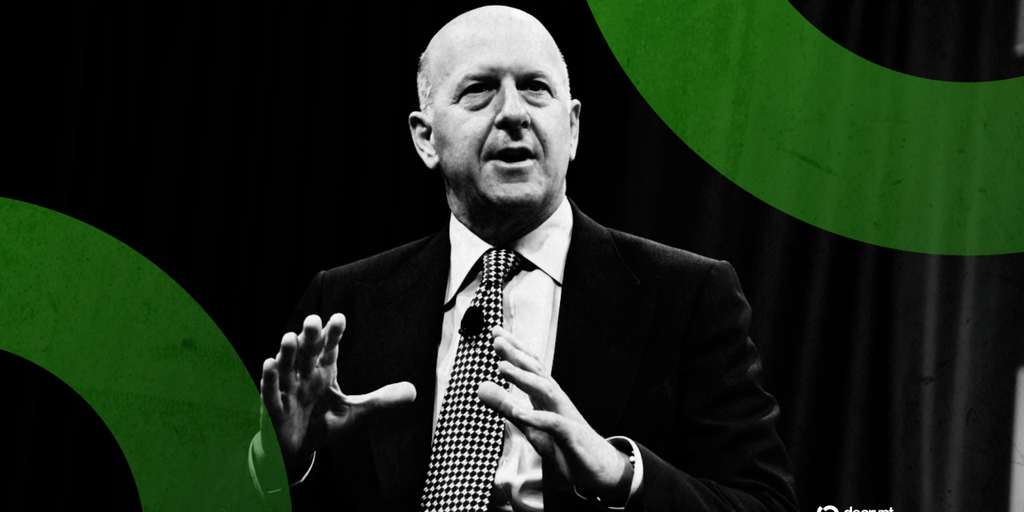
The headline isn’t David Solomon’s Bitcoin stack—it’s the posture. The Goldman Sachs chief told a Mar-a-Lago audience that crypto firms refusing to back the Senate’s market structure bill should “move to El Salvador,” aligning himself with Treasury Secretary Scott Bessent’s harder line. The message is unmistakable: institutions would rather live with imperfect statutes than extended ambiguity.
The backdrop matters. Last month, Coinbase CEO Brian Armstrong pulled the company’s support for the Senate crypto market structure bill, stalling a key vote that still hasn’t been rescheduled. Armstrong said he’d “rather have no bill than a bad bill.” Bessent answered by labeling such leaders “nihilists,” later escalating to “recalcitrant actors.” Solomon, asked Wednesday about the legislation, said he’s “in the same camp” as Bessent and that the industry cannot function without a rules-based regime. He added that codification won’t be perfect—then repeated the El Salvador line for those expecting to operate without it.
Solomon’s remarks came at the World Liberty Forum, hosted by the Trump family’s crypto venture, World Liberty Financial, at Mar-a-Lago. When pressed by a CNBC moderator on why he showed up, Solomon was blunt: Alex Witkoff asked, and the Witkoff family are “great clients” of Goldman Sachs. The room underscored the coalition forming around regulatory clarity: traditional finance leaders, crypto heavyweights, and global capital. Notably present was Changpeng Zhao, the Binance founder pardoned by President Donald Trump last fall. Also in attendance were lieutenants of a UAE sheikh who quietly acquired a 49% stake in the Trump family’s crypto company last year. Armstrong is slated to speak later in the day.
One line deservedly got attention—Solomon said he owns “very little, but some” Bitcoin and described himself as an observer. That’s consistent with how large banks typically approach emergent asset classes: maintain proximity, engage clients, constrain principal risk, and lobby for rules that formalize market plumbing. His minimal personal exposure also reinforces that this is a policy stance, not a trader’s bet.
The deeper question is why incumbents are pushing for “good enough” legislation while some crypto natives would prefer delay. From a market design perspective, even flawed statutes create predictable rails for custody, market making, disclosures, and token classification. That predictability reduces operational frictions, unlocks balance sheet participation, lowers legal capital charges over time, and paves the way for standardized listings and liquidity provisioning. In practice, it moves crypto from exception handling to enterprise workflow, which is where banks and asset managers are most comfortable.
For founders, the calculus can be different. Vague or restrictive categories can bake in disadvantage: if token frameworks harden around narrow definitions, permissionless innovation compresses and barriers to entry rise. A “bad bill” can calcify power for well-capitalized actors who can shoulder compliance overhead. The instinct to hold out is understandable—once definitions are codified, they are hard to reverse, and the risk of regulatory capture climbs. That’s the tension Bessent and Solomon are surfacing: take structure now and iterate, or gamble on continued limbo with sporadic enforcement.
The rhetoric about moving to El Salvador—now synonymous with a pro-Bitcoin policy environment—lands as a provocation. It riffs on a mobility mindset many crypto teams already embrace: jurisdictional competition disciplines policymakers. Still, anchoring U.S. market structure to a taunt is risky framing. It can alienate stakeholders who are negotiating in good faith for guardrails that preserve open standards. Productive compromise usually comes from precise drafting, not pressure lines.
What happens next will be shaped less by soundbites and more by who writes the definitions. If this bill returns to the Senate calendar, the fight will center on token categorization, exchange obligations, and the boundary between securities and commodities. The Mar-a-Lago guest list suggests that established money is organized and ready to underwrite a ruleset that institutionalizes crypto’s core functions. Whether Coinbase’s stance softens—or hardens—after Armstrong’s appearance may signal how unified the industry will be in that final mile.
For now, Solomon’s position is clear: codify a rules-based system, accept that it won’t be perfect, and get on with it. In institutional markets, time spent in ambiguity often compounds more risk than imperfect clarity.