Strive Scoops 3,311 BTC for $280M, Its Biggest Buy Since January, as ASST Leans Into the Dip
Strive bought 3,311 BTC for $280M at ~$84.5K, lifting holdings to 32,773 BTC. ASST accelerates a Saylor-style treasury play amid choppy prices and sector-wide accumulation.

Because Bitcoin
October 13, 2026
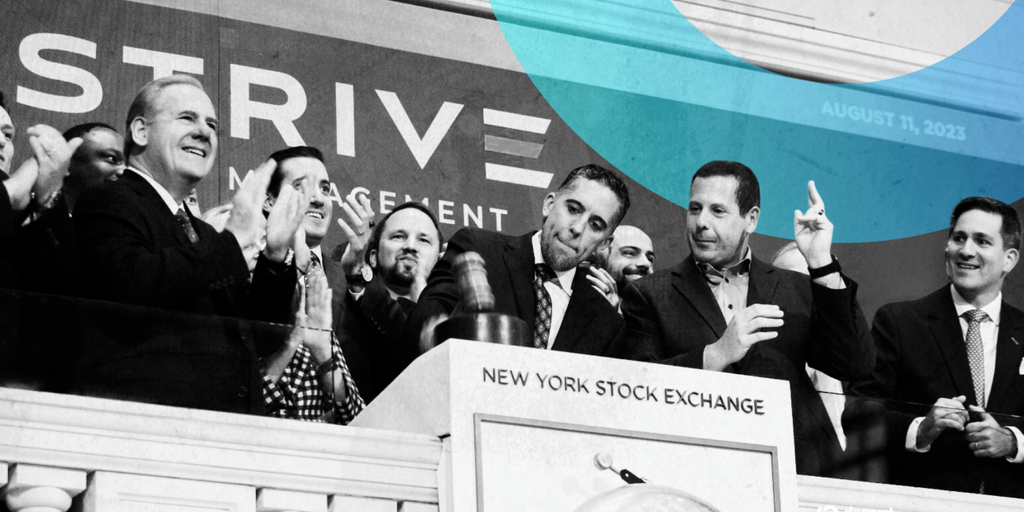
Strive accelerated its balance-sheet Bitcoin strategy into weakness, acquiring 3,311 BTC for roughly $280 million between October 5 and 9 at an average cost of about $84,500 per coin (including fees). It’s the firm’s largest single purchase since January and lifts total holdings to 32,773 BTC—about $2.73 billion at current prices—up from 29,462 BTC a week earlier. The Nasdaq-listed asset manager trades under the ticker ASST.
The headline is the cadence, not just the size. After a $94.5 million add in late September pushed holdings past 27,000 BTC, Strive followed with a $169 million buy earlier this month—then topped both with this latest tranche. The firm bought as Bitcoin slipped through a rough week, paying an average below recent highs near $87,000. At the time of writing, BTC trades around $83,294 (down ~2.71% on the day), with a 24-hour high of $84,074, low of $81,018, and volume near $1.3 billion. Short-term probabilities from Myriad peg a 56% chance of BTC ranging $82,000–$84,000 today and a 59% chance of finishing the week below $84,000.
What matters here is the reflexive treasury flywheel—and how Strive is choosing to feed it. The Saylor-style blueprint, pioneered by Michael Saylor’s Strategy, turns corporate equity into a levered bet on BTC via continual accumulation, balance-sheet optimization, and narrative momentum. Strive has moved quickly since going public through its merger with Asset Entities, and it recently completed a tie-up with Semler Scientific to bulk up its balance sheet. Beyond Bitcoin, the company reports roughly $310 million in cash and about 505,000 shares of Strategy’s STRC preferred stock, valued near $50 million.
That framework can work because a few forces often converge: - Capital access: Equity or preferred issuance can finance BTC at a blended cost lower than expected long-term appreciation. - Scarcity signaling: Regular buys telegraph commitment, which can compress perceived execution risk and support an equity premium. - Momentum psychology: Consistent accumulation into weakness can attract incremental flows from investors seeking a liquid BTC proxy.
But there are real constraints that sophisticated holders watch closely: - Price insensitivity: Buying at ~$84.5K—only modestly under recent highs—suggests Strive prioritized schedule and signaling over precision. That can be fine if capital is abundant; it’s tougher if liquidity thins. - Premium reliance: When an equity premium becomes tethered to a cadence of purchases, any pause risks multiple compression. Boards then face pressure to “keep buying” even when spreads are unattractive. - Treasury stack health: With ~$310 million in cash and additional preferred exposure, Strive appears to retain optionality, but the liquidity ladder and custody controls become central as BTC concentration rises.
The timing also lands amid broader treasury activity: Strategy added about $21.5 million in Bitcoin while buying back preferred stock; Solana-focused DeFi Development Corp. continues to accumulate SOL; and Bitmine keeps stacking Ethereum, with chairman Tom Lee indicating it will halt when it holds 5% of ETH’s supply. This clustering of corporate accumulation creates a competitive signaling game where pace, not just price, can influence investor psychology.
My take: Strive is leaning into the reflexivity on purpose. The firm is building a track record of showing up on dips, even shallow ones, to entrench the identity of ASST as a liquid BTC balance-sheet proxy. That can reinforce access to cheaper capital and keep spreads workable—until it doesn’t. The discipline test comes when price dislocates or issuance windows narrow. If Strive can maintain robust cash buffers, stagger its financing, and articulate pre-set risk bands for buys, it will keep the flywheel credible without overcommitting to any single timestamp. In this game, governance clarity often matters more than the headline size of any one purchase.